All three methods of tooth replacement have their pros and cons: dental implants are the most permanent, bridges claim moderate expense and construction speed, whereas dentures feature the least expensive setup, but are removable. It depends as much on your financial situation, how well your jawbone and gums are in good health and how many teeth you are missing as much as your preference.
Comparison Table
Factor | Dental Implants | Dental Bridges | Dentures |
Cost | Highest initial cost — per tooth | Moderate — cost increases as number of units increase | Lowest initial cost |
Lifespan | Does not require relining/replacement (assumes care for 20-30+ years, sometimes forever) | Will last about 10 to 15 years before relining/replacement (typically); | Will require relining/replacement in 5-8 years (typically) |
Feel & Comfort | Seem most like the natural teeth | Can feel bulky when first installed, but is acceptable over time | May move or become loose over time |
Impact on Adjacent Teeth | Adjacent Teeth Impact = none — does not touch adjacent teeth | Adjacent teeth filed down for support | None, ill-fitting dentures cause stress to the gums |
Effect on Jawbone | Stimulates the bone, which preserves the jawbone, does not stop bone loss, could actually promote it | Preserves jawbone by stimulating it as in a natural root | No effect on bone loss |
Treatment Timeline | Less than a month (months of implant, visit, and healing) or over several weeks (if a crown) | 2-3 visits over a few weeks | 1-2 weeks for fitting |
Dental Implants
How to Make Sure You Understand the Pros, Cons and Best Candidates for Dental Implants
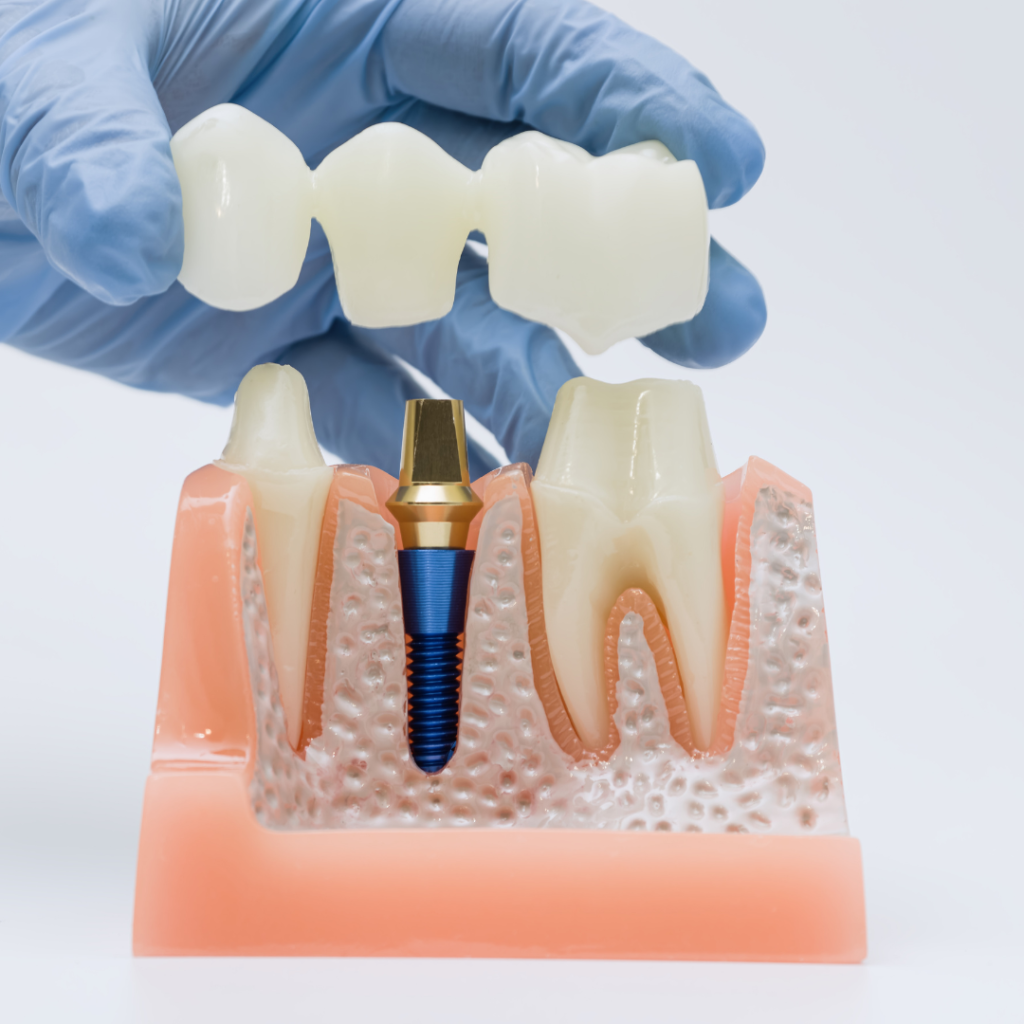
An implant is a titanium post inserted right into the jawbone and crowned. Fusing occurs with bone so it functions and feels most like a natural tooth root.
Pros
Longest lifespan
Requires no compromise of adjacent teeth
Prevents jaw bone loss after tooth loss
Strong enough to chew normally
Cons
The most expensive
Must be in a patient with good bone density (or bone grafting)
Is the longest to get crown
Best Candidates
This is ideal for those who are missing a tooth or several and are looking for a permanent solution with minimal upkeep and have bone or are willing to undergo bone grafting.
Dental Bridges
Understand the Pros and Cons and Best for Dental Bridges
A gap is bridged by putting false teeth which are supported by crowns on the side teeth. It is orientable and cannot be taken off.
Pros
- Aesthetically less appealing
- Tougher to take out
- Usually less expensive but for a single tooth
- A non-surgical procedure
Cons
- The supporting teeth need to be filed down, which can compromise the tooth’s strength if they are otherwise healthy
- It does not prevent any bone loss between the tooth
Best Candidates
This is ideal for patients who are missing one tooth or a couple of teeth in a row with existing dental bridging or crowns stained to teeth on one side, or when implant surgery is not feasible.
Dentures
Dentures, Complete or Partial, Are Available and Have Advantages and Disadvantages
Dentures are removable prostheses: Complete dentures are used for a missing entire arch, partial dentures fill in a few missing teeth around the remaining natural teeth.
Pros
- Least expensive upfront cost
- No surgery
- Fastest fit
- Adjusting or remaking is easy
Cons
- Shortest lifespan
- Can loosen or move during eating or talking
- Cannot stop jaw bone loss
- Must be removed and cleaned daily
Best Candidates
Best for: patients needing to replace a majority of their teeth and unable to afford implants or as a temporary replacement until they can afford or plan for implants.
How to Decide
Budget
Budget first: Dentures are the lowest initial price yet the most expensive to replace throughout the lifetime; implants are more expensive but have the least replacements over time.
Number of Missing Teeth
Full dentition versus one or more missing teeth: one or more missing teeth facilitates an implant or bridge while a complete arch may indicate dentures or implants (including All-on-4/All-on-6).
Bone Health
Bone health – the more implants the better but if much more there will be need for bone graft or choose a different option to bridge or get dentures.
Age & Long-Term Planning
Older patients – their implants may be more long-lasting and some patients opt for dentures at present and aim to get implants later when they can afford it.
Frequently Asked Questions
Which lasts longest?
By a long shot, implants last for a long time — 20+ years often; a lifetime with proper care, while a bridge will last for about 10-15 years and a denture will last for 5-8 years.
Which is cheaper in the long-term vs upfront?
The most affordable dentures up front are the solution. However, they do tend to run up expensive maintenance costs in the long-term due to requiring replacement more frequently than other systems, and they can be more cost-effective over decades.
Is there a possibility to change to an implant after getting a bridge?
Yes, frequently — many patients end up with a bridge or denture in place and progress to implants later on when funds are available or if the bone grafting is done first. Your dentist will decide whether you still have healthy bone and gums that will allow the change.
Still Looking?
The ideal option depends on your specific oral condition. It is recommended to evaluate your bone health, budget, and the number of missing teeth to obtain a personalized recommendation from The Dental Venue.
Note
Please note that this price is provided as a general guideline and may vary based on specific requirements.The above price is a general reference and is subject to individual needs.