Dental decay is one of the most prevalent oral health problems within the population of the global community. Cavities should also be treated early enough in case they cause further damage to the tooth. The two common procedures that are used to treat tooth decay are dental fillings and root canal treatment. Both of the procedures described aim at restoring both the functionality and health of a decayed tooth, however, the processes are focused on different levels and severity of dental decadence.
An important question that many patients would ask is on how dentists know whether a tooth requires a simple filling or some other more complicated procedure such as a root canal. It is based on the intensity of the decay process, the condition of the tooth pulp, the condition of infection and symptoms that the patient is currently facing.
Being aware of the disparity between these treatments will make the patients feel more knowledgeable and assured of their dental treatment.
Knowledge of Tooth Structure.
In order to determine why dentists prefer a particular treatment to the other, one should know the fundamental form of a tooth. A tooth has three major layers:
Enamel:The tooth is covered with the hardest layer that is the outermost and prevents the physical and chemical damage of the tooth.
Dentin:The layer below the enamel which has microscopic tubules connected with the nerve of the tooth.
Pulp:The deepest area of the tooth which has nerves, blood vessels and connective tissue.
When the decay process of teeth sets in, it usually starts in the enamel. Otherwise, the decay may extend deeper into the dentin and ultimately to the pulp where it may become infected and very painful.
What Is a Tooth Filling?
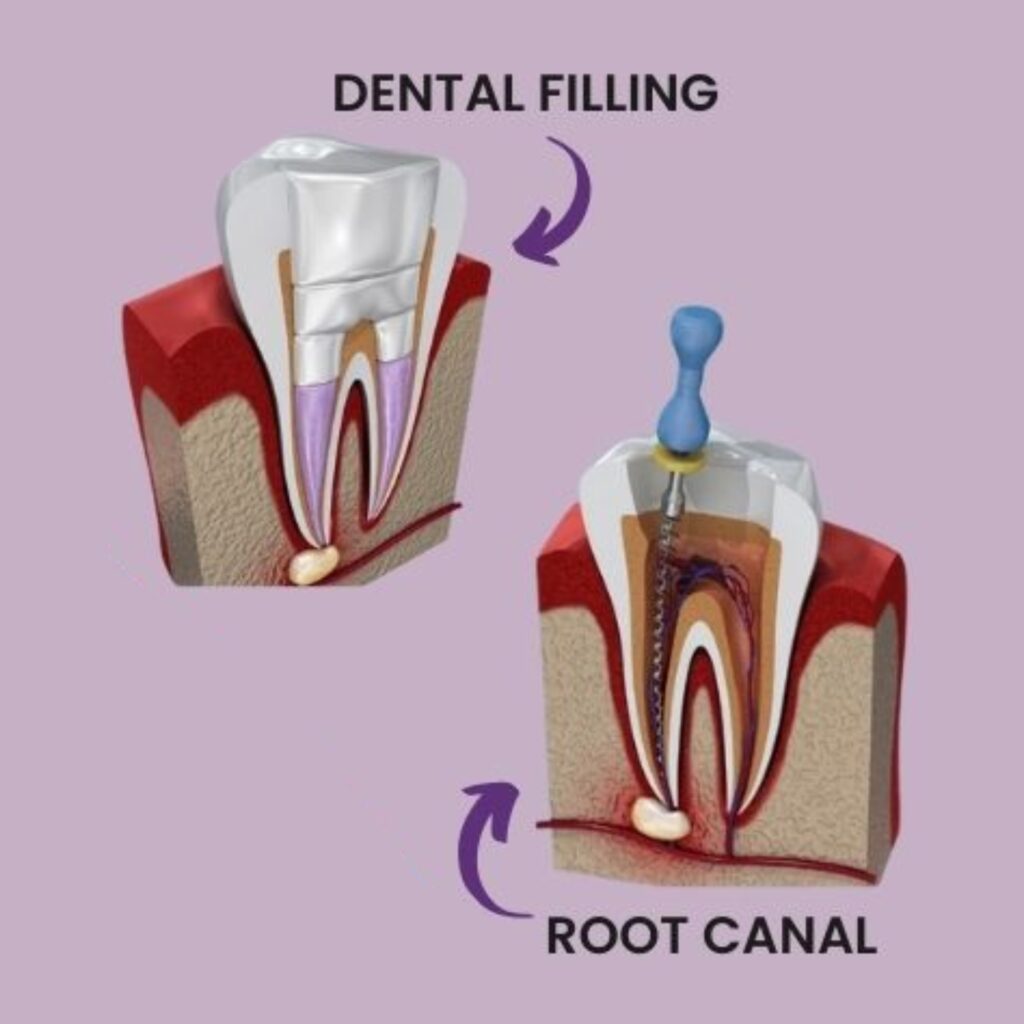
Dental filling is a restorative process that is applied to address minor to moderate cavities. In this, the dentist will remove the decayed part of the tooth and then fills the cavity he has made with a restorative material like composite resin, amalgam, ceramic or glass ionomer.
The filling covers the tooth and rebuilds its structure to avoid visiting the bacteria to the affected region once more.
When A Filling Is Recommended.
A filling is normally prescribed by dentists when:
- This cavity is confined to the enamel or the dentin.
- The pulp of the teeth remains intact.
- There is light or no pain in the patient.
- The nerve of the tooth has not been damaged.
Cavities may in most cases be treated using just a simple filling when detected early enough hence saving most of the natural tooth structure.
What Is a Root Canal Treatment?
Root canal Treatment This is a more specialized procedure, which is carried out when the tooth decay or infection has penetrated the pulp of the tooth. Bacteria have now entered the inner tissues resulting in the inflammation or infection of the nerve at this stage.
In a root canal surgery a dentist is able to remove the infected pulp, clean and disinfect inner root canals and seal the space with a special sealing material. This is followed by restoration of the tooth which is normally a dental crown to help protect and strengthen the tooth.
Though the process may look complicated, the current root canal therapy is very effective and aimed at curing the pain and saving the actual tooth.
Symptoms of a possible need for a root canal.
Root canal can be prescribed by dentists in case of some symptoms or diagnostic observations that suggest the presence of pulp damage or infection. These signs may include:
- Deep-seated or chronic pain in the tooth.
- Extensive sensitiveness to hot or cold weather conditions.
- The presence of swelling or tenderness of the gums around the affected tooth.
- Discolouration or blackening of the tooth.
- A pimple-like outburst on the gums which appears frequently.
- intensive caries appearing on dental X-rays.
Such symptoms tend to indicate the penetration of the infection into the inner tooth and it cannot be cured with the help of a simple filling.
The decision of Dentists: Between Filling and a Root Canal.
Dentists adopt various diagnostic techniques when trying to understand what best form of treatment can be offered to a broken tooth.
Clinical Examination
- The dentist then makes a visual and physical examination of the tooth to determine the amount of damage. Evidence like the visible cavities, fractures, or swelling of the gum, or sensitivity might give hints regarding the extent of severity of the case.
Dental X-Rays
- Dental X-rays enable the dentists to view the interior make-up of the tooth and the surrounding bone. With the use of X-rays, it can be determined to what extent the decay has gone and whether or not the pulp or the surrounding tissues have been impacted.
- The inner layers decaying to the outer should only be filled up. A root canal can however be required in case the pulp shows signs of infection or inflammation.
Evaluation of Symptoms
- Patient self-reported symptoms are significant in diagnosis. Early stage decay characterized by mild discomfort or occasional sensitivity is usually treated using a filling. Extensive pain, palliative sensitivity, or swelling can mean that the nerves have been involved, and root canal treatment is necessary.
Vitality Testing
- Tests are sometimes done to determine the health of the tooth nerve, to be sure that it is not defective. These are tests done on the pulp by administering temperature or electrical stimuli to ascertain the responsiveness of the pulp.
- Root canal treatment would normally be recommended in the event that the nerve presents indicators of irreparable damage.
Why Early Treatment Matters
Simple filling is highly likely to be adequate with early detection of cavities. In cases when the decay is not treated, the bacteria further propagate into the tooth until they reach the pulp and cause an infection.
At the point, one needs to undergo a root canal to eliminate the infected tissue and avoid the infection spreading to other structures.
Timely preventive dental treatment can prevent the loss of natural tooth structure and in most cases can save the more complicated treatment.
Preventing Tooth Decay
Although fillings and root canals are effective measures to treat problems, prevention is the best measure to treat healthy teeth. The major preventive measures are:
- Fluoride toothpasting of teeth twice a day.
- Brushing the teeth and flossing regularly so as to eliminate plaque.
- Reduction in acidic foods and sugary foods.
- Consumption of water following meal intakes in order to wash off food particles.
- Attending dental appointments on a regular basis.
Regular checkups enable early screening of cavity to prevent the further stages of the condition.
Conclusion
Both root canal and tooth filling are important procedures that are used in the restoration of the damaged teeth and maintenance of oral health. Dental filling is normally applied when decay has been identified at an initial stage before it has spread to the tooth pulp. Conversely, root canal therapy is necessary when the infection has gone to the inner parts of the tooth and it is endangering the wellbeing of the tooth.
The dentists identify the best treatment by closely observing, conducting diagnostic imaging, and performing symptom assessment. Visiting a dentist as soon as there are signs of tooth pain is a sure way of improving the odds of less complicated intervention and enhanced results. Doctors and dental health experts in The Dental Venue believe in early diagnosis and individualized treatment plans as a way of assisting patients to keep their natural teeth and ensuring excellent oral hygiene.